
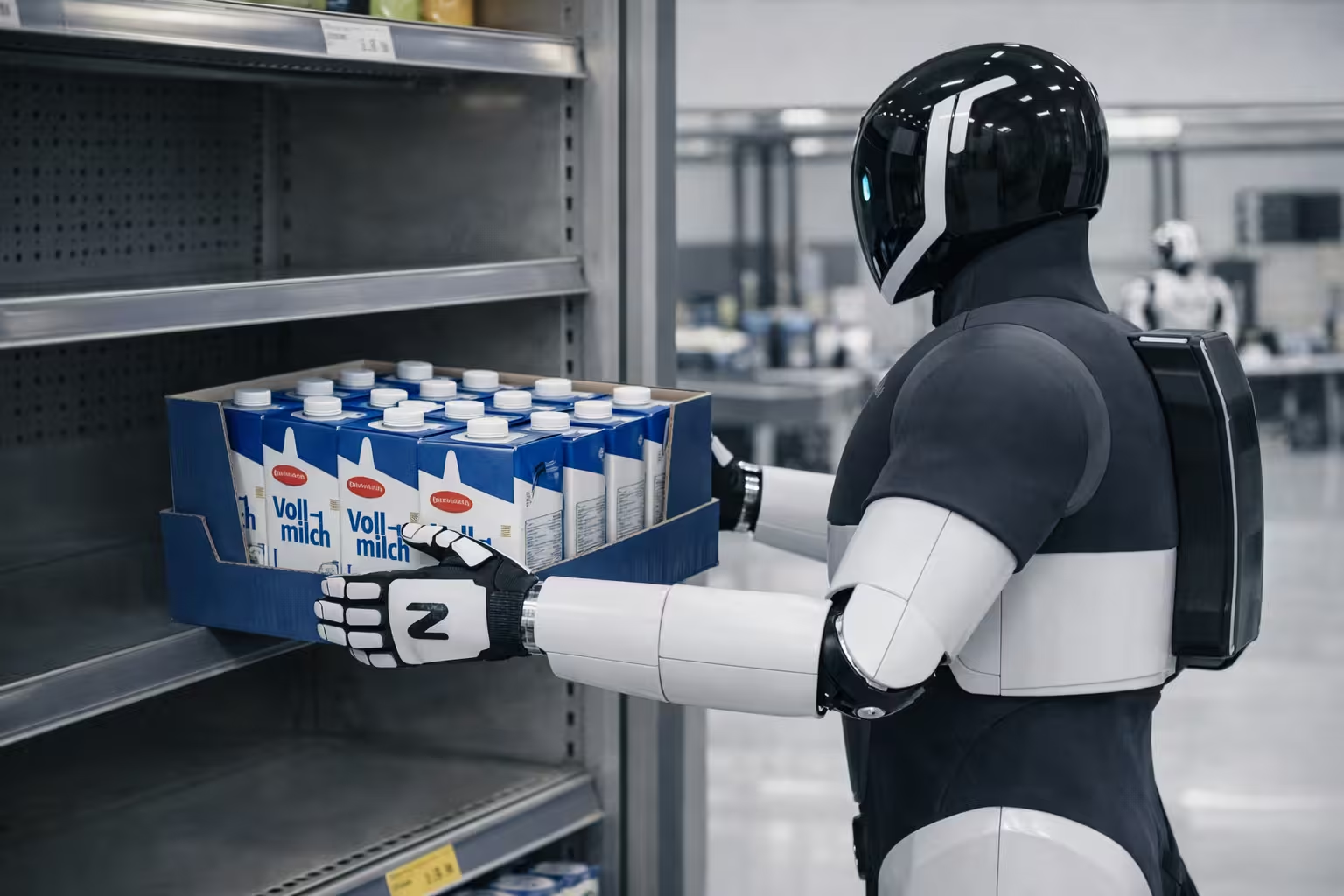
Choose the workflow before the robot
Supermarkets, gas-station convenience stores and smaller grocery formats have different constraints. A long repetitive transport route may favor a dedicated mobile platform. A manipulation task at a human-height shelf brings reach, grasping and recovery into the decision. Observing an empty shelf does not mean the robot can refill it.
FastLane helps frame these choices, with humanoid platforms as an important option for human-designed workspaces. We define what the robot should do, what staff continue to do and which evidence would justify the next step.
Four practical starting points
| Task | First questions | Measure |
|---|---|---|
| Backroom-to-floor transport | Who loads and unloads? Are routes and staging points clear? What cases and cart interfaces are used? | Completed deliveries and total staff time per delivery. |
| Shelf replenishment | Full cases or individual items? Which shelf heights, package types and front-facing rules? | Correctly placed items, damage and interventions. |
| Cooler stocking | Walk-in access or customer-facing doors? Condensation, temperature changes, clearances and door operation? | Completed stocking tasks under the agreed conditions. |
| Shelf observation | Which gap or availability decision will staff act on? How is the observation checked? | Useful verified alerts and time from detection to action. |
A clear starting point for U.S. retailers
We welcome pilot discussions with U.S. supermarket, convenience-store and gas-station operators. The first conversation establishes the site, task, staffing pattern and local service requirements. A project proposal then needs to settle hardware sourcing, on-site responsibilities, operating approvals and support coverage for that location.
For an existing store, begin with its real constraints. For a new store, the same evaluation can inform aisle clearances, doors, backroom routes, charging and handover locations. Those design choices should follow the selected workflow rather than an assumption that one robot will do every job.
Keep the first pilot narrow enough to learn
Select a representative route or shelf section and a defined product group. Include realistic interruptions, awkward packages and busy periods in testing. Record the denominator: how many attempts, how many successful completions and how much human help. An impressive demonstration becomes useful evidence when the failure and recovery data are visible too.
Cleaning and inventory scanning also have established specialist robot categories. The robot selection guide explains when those categories are a better starting point and when manipulation requires a different platform.
Agree on evidence before starting
A pilot brief should record the selected task, product sample, operating area, staff handover and stopping criteria. Measure a manual baseline in the same conditions before comparing the robot. Include setup, replenishment, supervision and recovery time in both sides of the comparison.
- Task completion: successful completions divided by all attempted tasks, with damaged or misplaced items reported separately.
- Human effort: staff minutes and remote-assistance minutes per completed task, including exceptions.
- Operational fit: blocked routes, shelf access, charging interruptions and impact on customers and colleagues.
- Decision: an agreed review of what worked, what requires another test and what would prevent expansion.
FastLane discusses the scope and responsibilities for each project. This is a planning and evaluation approach, not a claim of a completed customer installation, guaranteed savings or a fixed delivery date.
Bring us a task, a store and a reason to improve it
- The job and the shift when it consumes the most staff time.
- A typical product or case mix, with weights and packaging types if known.
- Store location and approximate route or workstation dimensions.
- The expected handover to staff and available pilot windows.
- Your definition of success: fewer repetitive staff minutes, better availability or another measurable outcome.
For a transparent evaluation method, read how to measure a supermarket robotics pilot. For the handling challenge, see robot hands and grocery grippers.