A useful supermarket robotics pilot should answer a specific business question. Can a robot complete a defined task at the required quality, with an acceptable amount of human support and a credible route to repeatable operation? A pilot that only produces an impressive video has left that question open.
The strongest starting point is deliberately narrow. Choose one task, a representative environment and agreed criteria for continuing, changing direction or stopping. This approach applies to a cashier workstation, a convenience-store replenishment task or a defined backroom-to-floor movement.
Write one sentence that defines the task
“Automate our store” is an ambition. “Move supported packaged items through an existing checkout workcell and confirm the required interface state” is a testable starting point. “Replenish these beverage positions from this staging area” is another.
Specify the initial state, permitted actions and successful ending state. Then list the unsupported cases. For an early checkout evaluation, it may be sensible to exclude cash, bottle-return vouchers, abandoned goods and complex customer interaction. Excluding a case is useful only if the store has a clear handover process for it.
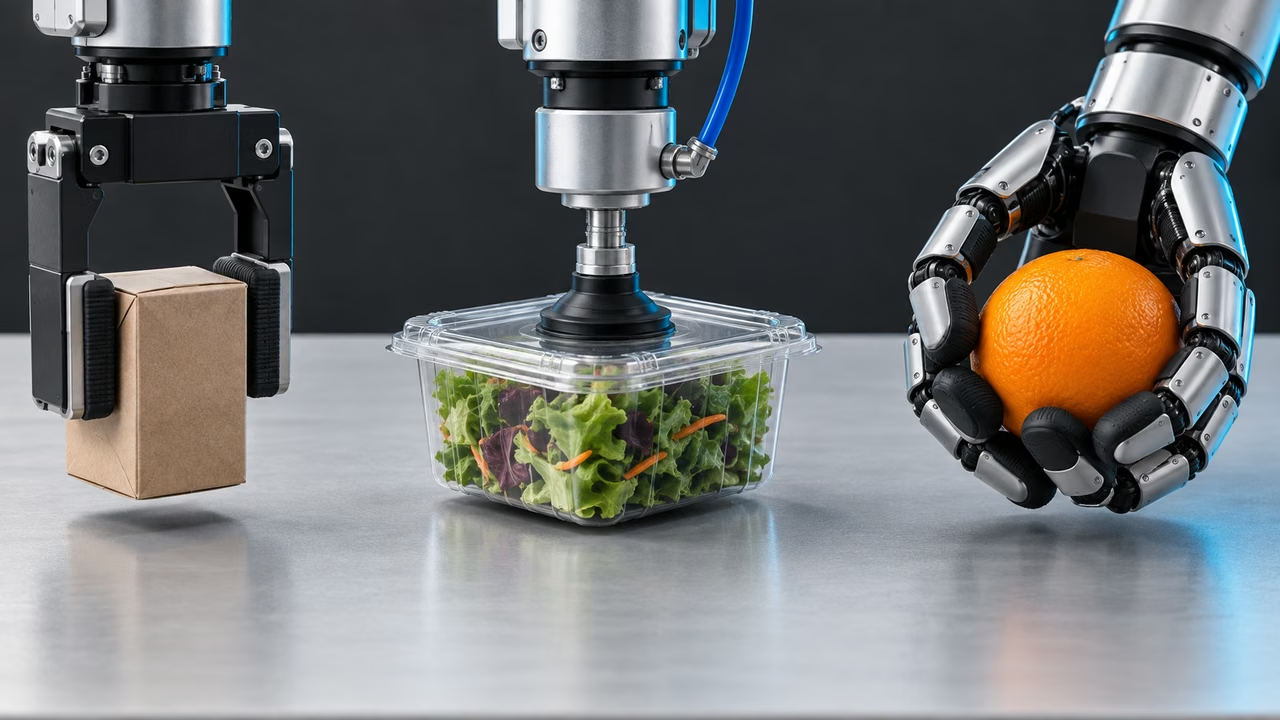
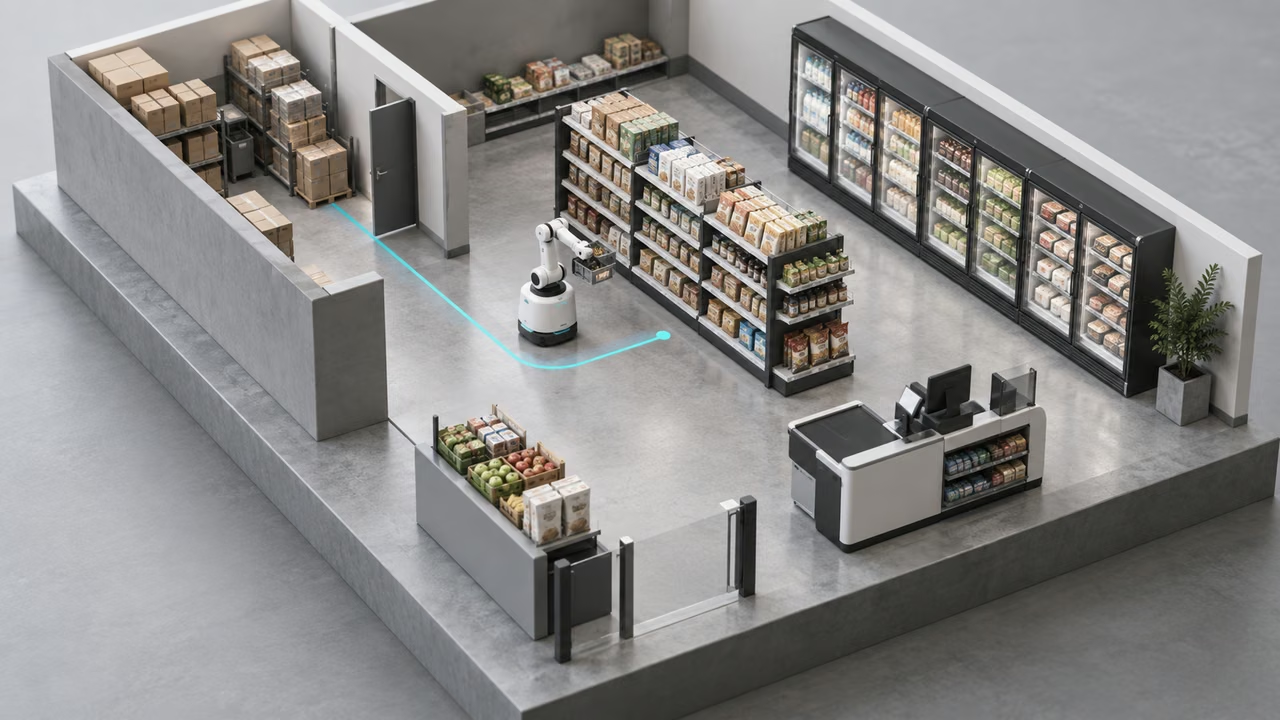
For replenishment, separate transport from manipulation. Moving a case to an aisle, opening it and placing individual products on a shelf are distinct steps. In a refrigerated area, also define the relevant door, access and handling constraints. Avoid combining several unsolved tasks into one headline promise.
Establish the current baseline before introducing the robot
Observe the existing process across representative periods. Record task volume, elapsed time, active staff time, exceptions, quality and the conditions under which work is performed. A quiet demonstration period should not be compared with a busy baseline shift without explanation.
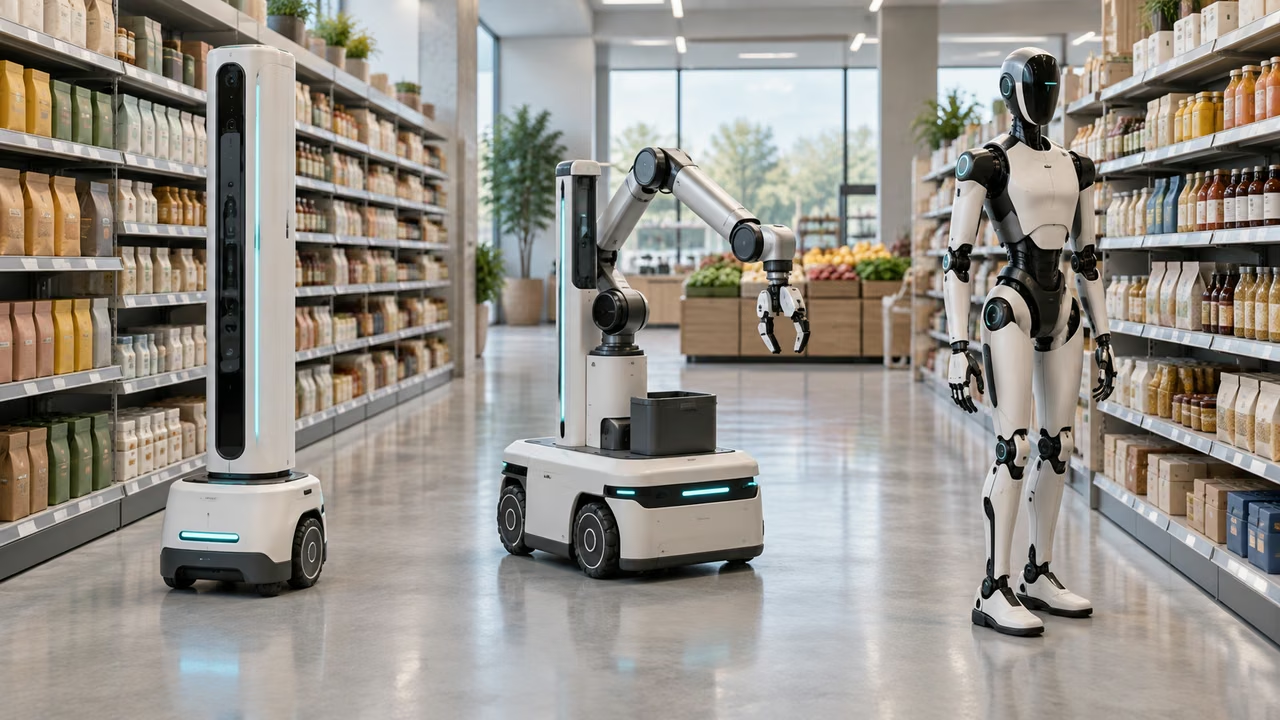
Distinguish observation from action. Simbe’s Tally workflow is an example of shelf observation that produces tasks for employees. Badger’s stated retail functions similarly include monitoring store conditions. A pilot of physical replenishment needs a different completion definition from a pilot that identifies a shelf gap.
Keep the baseline simple enough to repeat. If measuring it requires a special analyst every day, the eventual store process may not be able to maintain the comparison.
Agree the operating envelope
The operating envelope describes where the result is expected to hold. It should be specific enough that staff can recognize when a task falls outside it.
- Products: item families, dimensions, weights, packaging condition and unsupported items.
- Workplace: fixture geometry, floor conditions, reachable areas and expected obstructions.
- Workflow: starting states, permitted actions, confirmation signals and ending states.
- People: supervision, local responsibilities, customer access and escalation ownership.
- Operating conditions: planned hours, charging, network dependencies and daily preparation.
- Exceptions: what the system detects, how it pauses or ends a task and who resolves it.
This document is also a tool for selecting the robot platform and end effector. If the required configuration is unavailable for meaningful evaluation, that is a procurement constraint to solve before committing to a large purchase.
Existing POS interaction still needs workflow validation
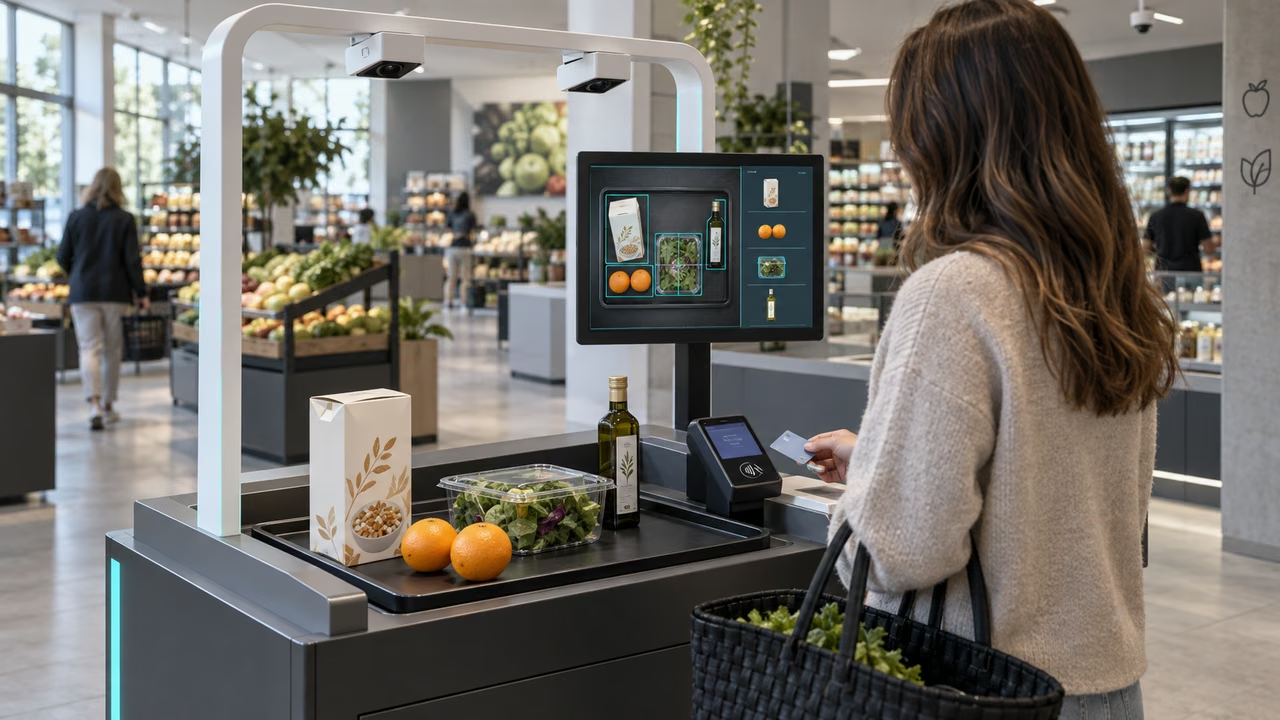
A robot may be designed to interact physically with an existing touchscreen and scanner rather than exchange data through a direct POS integration. That changes the technical approach, but it does not remove the need to validate the transaction workflow.
Test how the system recognizes the screen, confirms a scan, handles a delayed response and avoids repeating an action unintentionally. If produce uses a product lookup code, define the supported selection or entry process and how the result is checked. A successful screen press is an intermediate action, not proof that the intended item or state was recorded correctly.
Payment, restricted-item decisions, overrides and refunds should have named owners. The absence of a POS API is not proof that no information is observed or processed. Include the relevant data flows and access permissions in the project design.
Choose metrics with clear denominators
| Measure | Useful definition | What to agree before testing |
|---|---|---|
| Correct completion | Tasks meeting every required ending condition divided by attempted tasks | Quality criteria and treatment of aborted attempts |
| Independent completion | Correct tasks completed without local or remote help divided by attempted tasks | What counts as assistance |
| Human effort | All staff and operator minutes required for the evaluated work | Setup, recovery, monitoring and daily care included |
| Cycle time | Elapsed task time, including retries and relevant waiting | Median, slower tail, sample size and task mix |
| Damage or error | Unacceptable product or workflow outcomes per attempted task | Inspection method and severity categories |
| Available operating time | Time ready for assigned work divided by the agreed scheduled window | Planned charging and maintenance treatment |
| Recovery | Outcome and time after a failed attempt or interruption | Automatic retry, remote help and local intervention separated |
Choose pass thresholds before testing, with the retailer and technical team. Do not invent universal values: a stocking task outside opening hours and a customer-facing checkout lane have different consequences for delay and interruption.
Keep results by product category and operating condition. An acceptable average can conceal one frequently sold item that performs poorly. Record changes between test runs so improvements can be attributed to the right configuration.
Use staged evidence, not an arbitrary calendar promise
- Workcell feasibility: verify reach, manipulation, control access and the basic task away from normal customer operation.
- Representative task evaluation: expand the item set, include exceptions and test conditions reserved from tuning.
- Supervised store operation: evaluate the bounded workflow with the agreed local controls and staff responsibilities.
- Operational endurance: observe repeated work over realistic periods, including preparation, interruptions, wear and recovery.
- Acceptance decision: compare the evidence with the predefined criteria and decide what the next stage should change.
Each stage should have an explicit entry condition. A delay can be informative if it reveals a missing capability before money is committed to a larger deployment. Simulation and demonstrations can support these stages, but they do not replace the physical acceptance evidence described in the robot-learning guide.
Calculate value without counting the same benefit twice
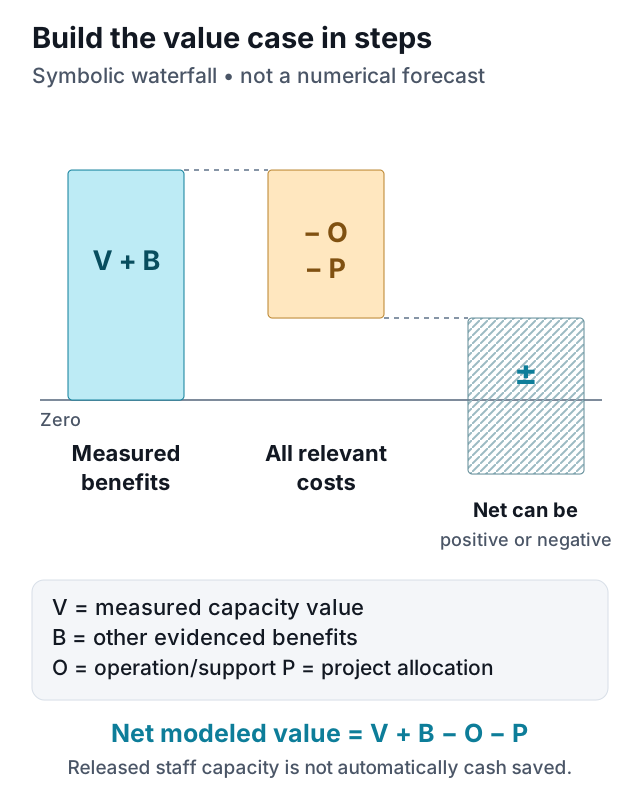
Begin with the measured change in the workflow. Add operating and support costs. Then separate released capacity, cash savings, revenue effects and quality improvements. They may all matter, but they are not interchangeable.
Hypothetical example: a replenishment activity currently takes 90 staff minutes per day. A robot-assisted version still needs 45 minutes of handling and exceptions plus 15 minutes of preparation and care. It releases 30 minutes per day. At an illustrative loaded labor value of $30 per hour and 26 operating days, that is $390 per month of capacity value.
If the incremental recurring cost is $600 per month, the labor-capacity calculation alone leaves a $210 monthly gap. There may be other benefits, but they need evidence. Do not fill the gap with assumed sales growth or count those 30 minutes as payroll savings unless staffing actually changes.
A fuller model should include one-time engineering, tooling, site preparation, staff training, maintenance, support and the chosen treatment of capital costs. For remote assistance, use measured intervention demand and realistic coverage instead of assuming one operator can support an arbitrary fleet size. The teleoperation guide provides a worked workload example.
Resolve the practical purchasing questions early
A retailer and an engineering team may want the same pilot but face different hardware constraints. Establish whether a supplier offers a demonstration unit, a supervised evaluation, a loan or a rental arrangement. Do not assume such options exist. Confirm the exact access, duration, liability arrangements and support included before using them in the plan.
For an international or US pilot, assign responsibility for delivery, local commissioning, replacement parts and support hours. Confirm who can attend the site when remote troubleshooting is insufficient. A proposal should make those arrangements concrete without implying a service network that has not been established.
The acceptance packet should fit the decision
At the end, assemble the task specification, tested configuration, trial counts, quality results, human effort, operating interruptions and remaining exclusions. Include representative uncut recordings and a concise failure log. Explain any differences from the original baseline.
The decision is then practical: expand the operating envelope, revise a specific part of the system, repeat an uncertain test or stop that approach. A negative result can prevent a much more expensive rollout mistake. A positive result should identify the conditions under which it was achieved.
Discuss a retail pilot with FastLane by sharing the store country, task, typical products and desired outcome. The objective is a project that produces usable evidence and a clear next decision.
Sources and further reading
- Simbe: an example of shelf observation and staff action workflows
- Badger Technologies: examples of defined in-store monitoring tasks
- NVIDIA: tools supporting robot training and evaluation
The pilot framework, scorecard and financial example are original editorial guidance. They are not a customer case study, quoted project price or statement of measured FastLane performance.