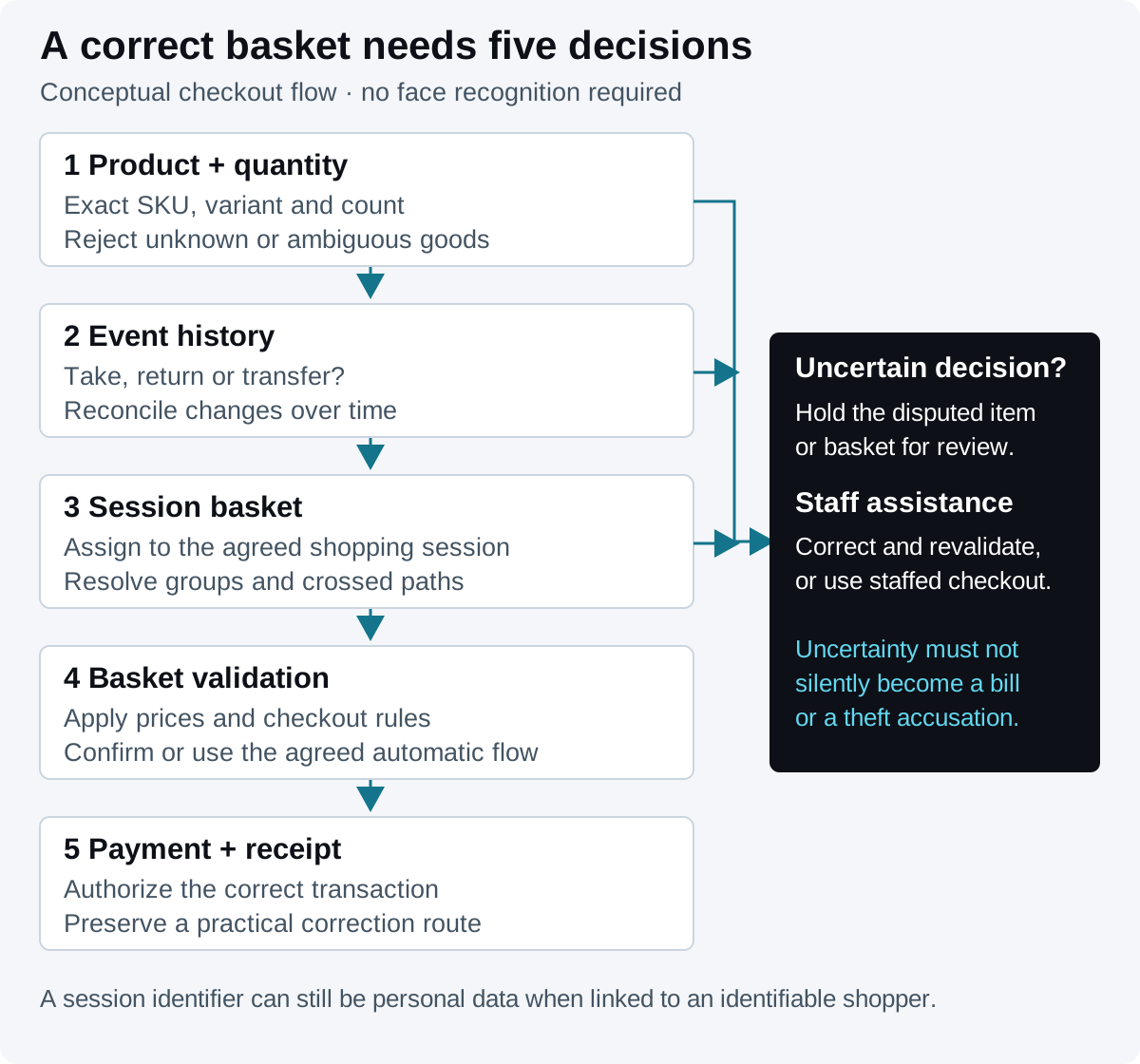
A camera can recognize a cereal box. A useful checkout system must also know which size it is, whether it was taken or returned, which shopping basket it belongs to, and whether the resulting bill is correct. Those are different problems—and solving the first does not automatically solve the others.
Computer vision checkout uses cameras to help customers use a self-service lane, build a basket without scanning individual barcodes, or support a checkout-free store. None inherently requires a humanoid robot. The right starting point is the part of shopping you want to improve: identifying goods, reducing scanning effort, checking the basket, or physically handling products.
Choose the checkout experience before choosing the hardware
| Approach | What the system does | What still needs a clear process |
|---|---|---|
| Camera-assisted self-checkout | Suggests an item or checks a scan against the visible product. | Customer confirmation, ambiguous products and staff assistance. |
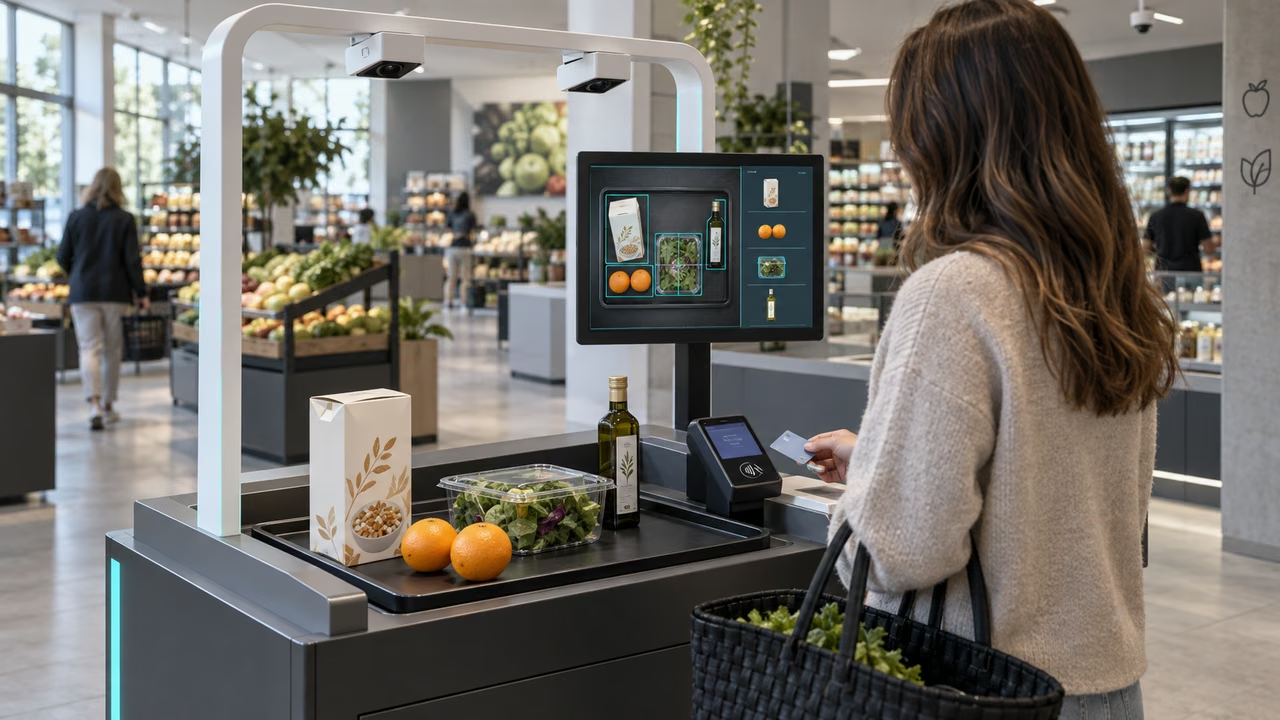
| Scan-free checkout station | Recognizes goods in a defined presentation area and builds the proposed basket. | Overlapping items, quantities, weighed goods and payment. |
| Checkout-free store | Associates product interactions with a shopping session across the store. | Group shopping, returns to shelves, session continuity and billing disputes. |
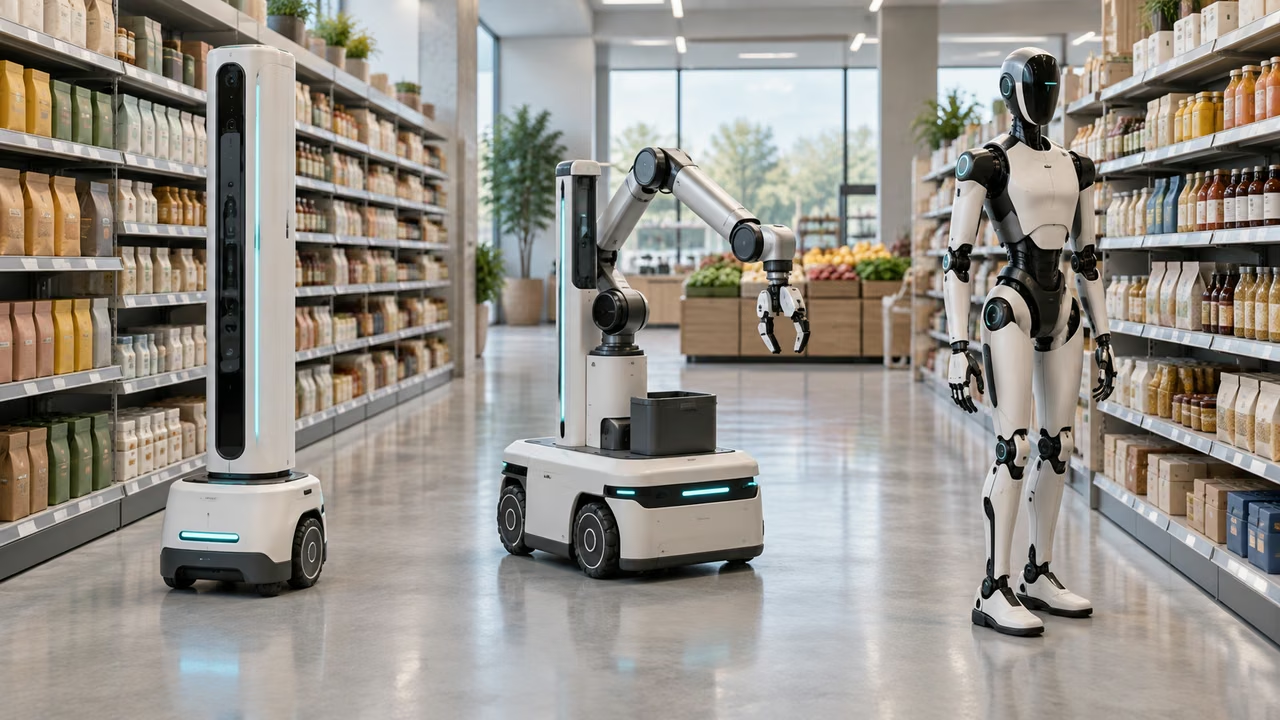
| Robot-assisted checkout | Adds physical picking, orienting, scanning or placing. | Grasp reliability, reach, collision risks and recovery as well as recognition. |
A robot becomes relevant when moving the item is part of the requirement. If the requirement is to recognize goods and charge the correct basket, start by evaluating cameras, the checkout interface and payment integration. “Checkout-free” describes the customer journey; replenishment, support and exceptions still require an operating team.
Recognizing a product is different from identifying a person
Product recognition maps visual evidence to the retailer’s catalog: an exact stock-keeping unit (SKU), pack size and variant, with a quantity where possible. A can of regular cola and its sugar-free equivalent may share most of their appearance. A promotional sleeve, reflective wrapper or partly hidden label can change the evidence. Barcode reading, text recognition, shelf position or weight can help resolve ambiguity; none should silently override a contradictory observation.
Shopping-session association answers another question: which temporary basket should receive this event? At a lane, the active transaction and a defined presentation zone may provide the link. Across a store, a system may maintain a temporary track and connect it to an entry token or payment interaction. It need not determine the shopper’s name or recognize their face to do this.
However, a temporary identifier is not automatically anonymous. If the retailer can connect its movement history or basket to an identifiable customer or payment account, personal-data rules can still apply. The GDPR distinguishes personal data and pseudonymisation; removing a name alone does not settle the question.
Build an event history, not just a list of pictures
A workable basket needs changes over time. Consider this deliberately simple sequence: a shopper takes two cartons, returns one, hands the other to a companion, and reaches the checkout. A product detector may identify every carton correctly while the final basket is still wrong.
Design separate checks for product identity, quantity, pick/return events and session ownership. Define whether a group shares one basket, how items transferred between shoppers are handled, and what happens when two people cross or an object disappears behind a bag. Preserve uncertainty until another observation or a person resolves it.
The payment step should consume a validated basket under the agreed checkout rules. It also needs authoritative prices, promotions and taxes from the retailer’s systems, plus a clear correction and refund route. An uncertain recognition should produce a useful assistance prompt, rather than silently become a charge or an accusation of theft.
What real deployments tell us about camera-only checkout
Commercial examples demonstrate several architectures. They do not prove that one configuration fits every store:
- AiFi: its 2023 account of deployments including Żabka describes camera-only computer vision without weight-sensing shelves, alongside store calibration and payment integration. This is evidence of a vendor’s deployed approach, not a guarantee for an untested assortment.
- Trigo and Tesco: Tesco’s GetGo announcement describes a combination of cameras and weight sensors. Calling every computer-vision store “camera-only” would misrepresent this example.
- Amazon Just Walk Out: its technology explanation describes computer vision with sensors, and an RFID alternative for tagged items. Entry-based and exit-based payment flows also differ.
These are third-party examples, not FastLane deployments or partnerships. The practical question is whether camera-only observation meets your accepted error and intervention limits. If additional sensing materially improves that result, evaluate its installation and maintenance cost rather than treating “camera-only” as a requirement by itself.
Training cameras and training robots require different evidence
For recognition, start with the catalog. Maintain exact SKU identifiers, current packaging, size variants and product changes. Photograph the actual goods under representative lighting, angles and occlusions. Include empty hands, personal belongings and products outside the approved assortment, so the system can reject an unknown object instead of forcing a catalog match.
For basket building, label events and ownership. Training examples need the correct count, take/return action, session assignment and outcome. A clean product photograph cannot teach every crowded-store interaction. The research RPC retail-checkout dataset illustrates the distinction between isolated product examples and checkout scenes; a benchmark dataset is a development resource, not acceptance evidence for your store.
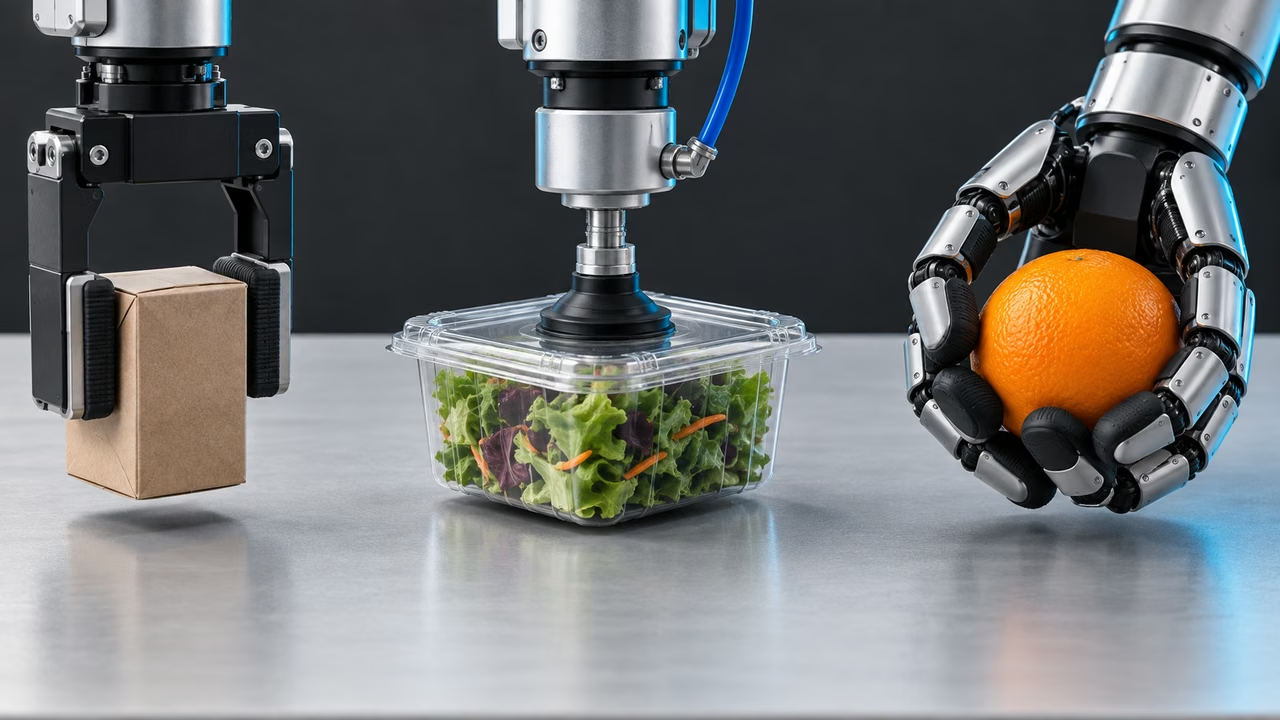
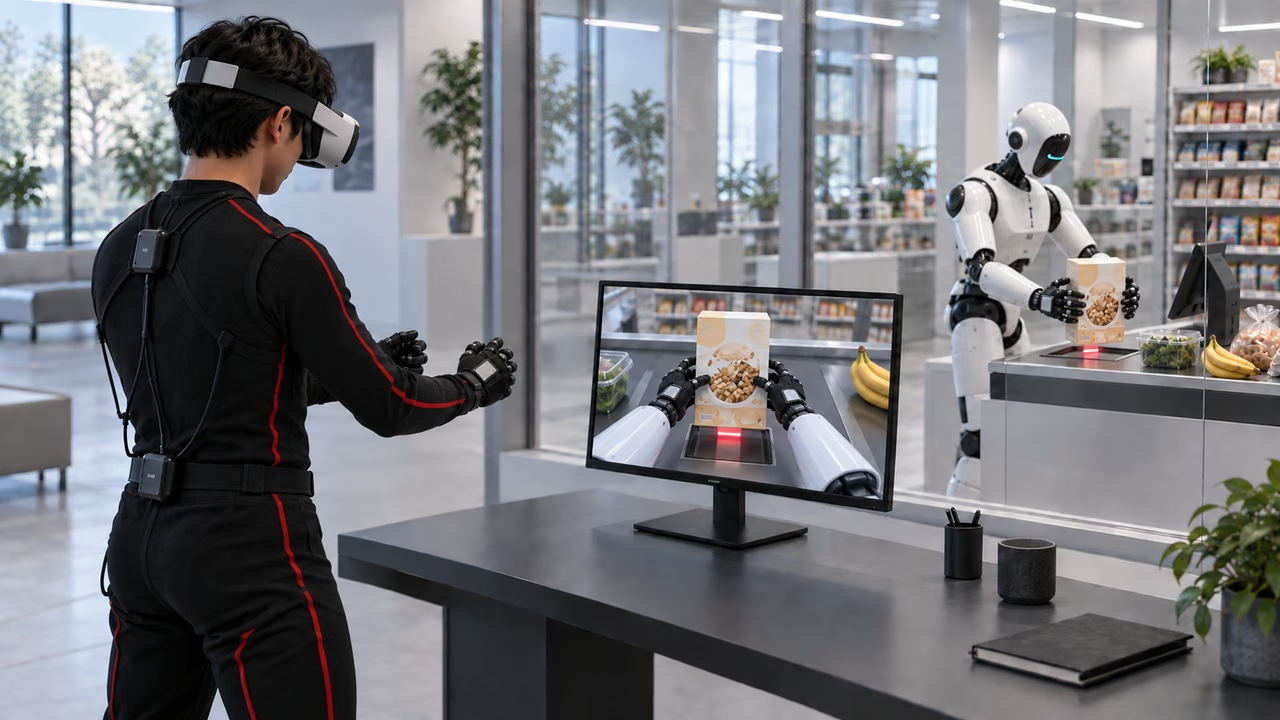
For robots, add action and contact. Recognizing a carton does not establish how to grasp it, rotate it toward a scanner or release it without damage. Demonstrations and physical trials must cover robot pose, gripper behavior, contact and recovery. Camera models and robot policies can share useful representations, but require separate evaluation. Our guides to sim-to-real learning and teleoperation explain that training loop.
Reserve complete shopping sessions, recording days and relevant packaging changes for evaluation. Randomly splitting neighboring video frames can put almost identical scenes in training and testing. Begin collection in a controlled setup with an agreed data-use basis; using live customer footage to improve a supplier’s general model needs its own assessment. Agree who owns the annotations, whether the supplier may reuse footage for other models, and how export and deletion work. After launch, retest packaging changes, new products and camera repositioning before relying on previous results.
Measure the correct basket, not just recognition accuracy
Agree on separate metrics for exact SKU recognition, quantity, correct session assignment and the final bill. Record overcharges and undercharges independently; an average financial difference can hide both. Include the share requiring review, staff minutes per basket, customer waiting time and receipt corrections after departure.
Hypothetical example: assume each item has a 99.5% chance of being handled correctly by the complete identification step, and assume errors are independent. For 20 items, the probability that all are correct is 0.99520, approximately 90.5%. This simplified calculation is not a vendor benchmark or a forecast: real errors can be correlated, and session or quantity mistakes add other failure paths. It shows why item accuracy alone is a weak buying criterion.
| Test situation | Evidence to record |
|---|---|
| Lookalike variants and changed packaging | Exact SKU match, rejection behavior and correction time. |
| Two identical items, partial overlap, pick then return | Final quantity and whether every event is reconciled. |
| Two shoppers crossing or sharing products | Correct session basket, unresolved transfers and staff review. |
| Network interruption or unavailable payment | Preserved transaction state, no duplicate charge and staffed fallback. |
Test a representative mix and report denominators, not only successful demonstration clips. Set thresholds and a stop rule before the pilot. The pilot measurement guide explains how to separate released staff capacity from cash savings.
Design privacy into the actual data flow
Start with a diagram of what is captured, what is inferred, where it is processed, who can access it and when it is deleted. Separate product imagery, temporary session tracking, payment references and any training dataset. Prefer a narrowly framed checkout view when that meets the task; a whole-store tracking system needs a different assessment.
Germany and the EU
For personal-data processing, identify the purpose and lawful basis, test necessity and proportionality, and document controller/processor responsibilities. Under the EDPB’s video-device guidance, large-scale systematic monitoring of publicly accessible areas requires a data protection impact assessment. Give people clear information before the monitored area, set purpose-specific retention, restrict access and evaluate transfers or remote access outside the relevant jurisdiction. A sign provides information; it does not by itself establish valid consent.
Biometric processing to uniquely identify a person raises additional Article 9 requirements. Product recognition does not itself require that function. Ask suppliers what tracking features they actually compute and retain: a claim of “no facial recognition” is not a complete description of the processing.
Germany’s DSK guidance for private-sector video surveillance also addresses employees and retention. Do not turn checkout cameras into unrestricted staff-performance monitoring, and do not treat a generic retention period as permission to keep all footage. Involve the data protection officer and, where applicable, employee representatives before the design is fixed.
United Kingdom
The ICO calls for a documented lawful basis, limited collection and appropriate safeguards; biometric identification can require a separate special-category condition. Its accountability guidance explains DPIAs for high-risk surveillance. The ICO marks this guidance as under review following the Data (Use and Access) Act, so check the current position for the planned deployment rather than copying an old checklist.
United States
US deployment needs a state-specific data map. Illinois BIPA distinguishes photographs from identifiers such as face- or hand-geometry scans. Where a system collects covered biometric data, written disclosures and a written release are required before collection, alongside retention and destruction rules. Inspect what the model actually extracts; a product-recognition camera and a biometric identification system raise different questions.
In California, avoiding facial recognition does not necessarily remove CCPA obligations. For covered businesses, a basket linked directly or indirectly to a shopper can remain personal information. Define notice at collection, purpose, retention and service-provider controls. Map whether tokens reconnect to payments or accounts. Treat anonymity as something to demonstrate.
Across locations, provide a practical way to question a basket, get staff help and correct a bill. Privacy and customer support belong in the checkout design, not only in the policy page. Have local counsel or your privacy lead review the actual deployment; this overview is a planning aid, not jurisdiction-specific legal clearance.
If a robot is needed, assess the complete import and support package
Importing a humanoid from China adds a separate workstream if physical handling is part of the project. A purchase quote should lead to four concrete checks:
- Classification and landed cost. A CBP ruling for specified AgiBot platforms illustrates why every humanoid cannot simply be assumed to fall into the industrial-robot tariff category. Have a broker assess your exact configuration, origin and entry date, including current additional duties and exclusions. An old ruling’s percentage is not a current quote.
- US deployment requirements. Check the actual radios against FCC import and authorization requirements, and determine applicable workplace electrical approvals for the robot and charger. OSHA’s NRTL framework covers defined products and testing scopes; customs clearance does not establish safe store integration.
- European documentation. EU importers must check applicable conformity requirements and documentation. The Machinery Regulation generally applies from 20 January 2027, so the relevant date matters. Great Britain has its own market-placement rules; do not assume all UK destinations follow an identical route.
- Transport and support. For lithium batteries, obtain the matching test summary and confirm the shipping configuration against transport requirements. Agree who supplies software access, spare parts, repair, updates and commissioning. Budget those responsibilities alongside freight and hardware.
Keep the advice independent of a particular robot brand
A useful project brief describes the store, country, assortment, existing checkout, peak basket size and the task causing the most friction. It should allow a camera-assisted lane, scan-free station, fixed robot arm or humanoid to compete against the same outcome.
FastLane’s checkout scoping work helps define that scope, compare configurations and prepare training and evaluation. The hardware choice follows the task and available evidence. Software access, integration responsibility, spare parts, update support and a realistic test arrangement matter alongside the purchase price. The robot selection guide provides a broader procurement framework.
Discuss a camera or robotics checkout pilot
Sources and scope
Primary sources checked on 22 September 2026. Vendor examples describe their own systems and historical deployments, not independently measured performance in your store. Regulatory sources inform the questions above; the precise system, jurisdiction and deployment date determine the assessment.
- Deployment accounts: AiFi, Tesco/Trigo, Amazon Just Walk Out.
- Recognition research: RPC dataset paper.
- Privacy: GDPR, EDPB, German DSK, UK ICO, and the Illinois and California statutes linked above.
- Procurement: CBP, USITC, FCC, OSHA, PHMSA, European Commission, EU legislation and GOV.UK guidance linked in the import checklist.