
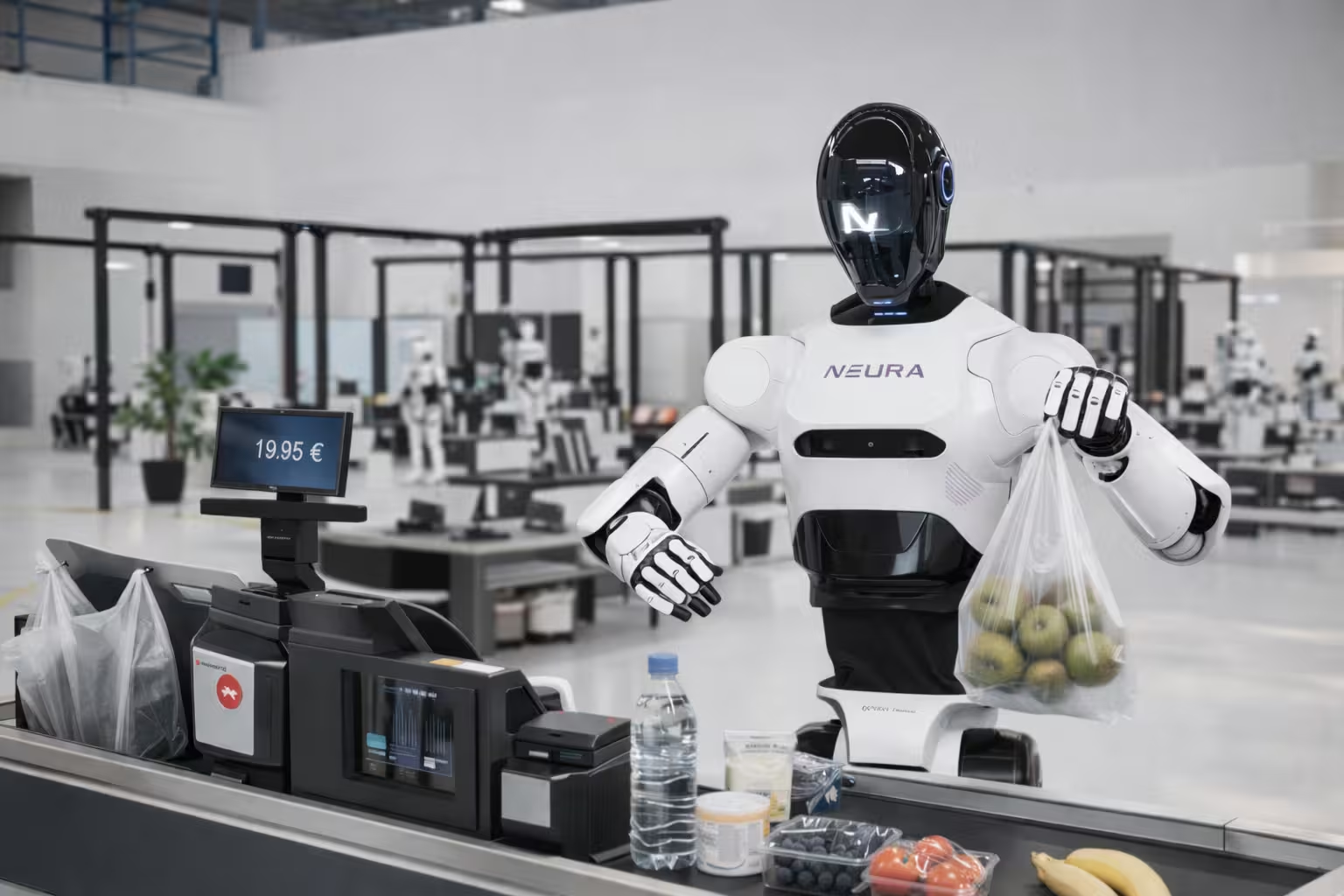
Camera-based checkout, robotic handling or a combination
Computer vision can identify products at a self-checkout or follow pick-and-return events into a shopping-session basket. An automated checkout can operate without a robot: fixed cameras provide observations while software maintains the basket and connects it to the agreed payment flow. Some architectures also use weight or other sensors. The store layout, assortment and exception handling determine which approach fits.
FastLane helps compare hardware and software options, define the training data and evaluate product recognition, basket accuracy and the customer journey. Existing POS and payment integration, privacy and local support are part of the scope. We do not tie the initial recommendation to one robot or camera manufacturer.
Read the practical guide to camera-based checkout, privacy and deployment.
When a robot should work through the physical interface
The concept is to observe the checkout with cameras and operate human-facing controls mechanically. It is intended to reduce dependence on a new POS software integration: the robot reads the visible state, handles an item, presents its barcode and follows the agreed checkout sequence.
That is an engineering approach to evaluate at a specific lane. Scanner geometry, touchscreen behavior, lighting, conveyor timing and the retailer’s operating rules determine the scope. We establish those boundaries before defining the pilot.
For a bounded lane pilot, a fixed collaborative robot with camera-assisted item recognition is another configuration to evaluate alongside humanoids, using the same reach, handling, interface and safety criteria.
Start with a bounded checkout workflow
| Workflow step | What the pilot must demonstrate |
|---|---|
| Pick and orient | Reach the agreed item range without crushing packaging or obstructing the lane. |
| Identify and scan | Recognize a successful scan, detect a missed or duplicate scan and follow the correct recovery procedure. |
| Operate the interface | Use the specified touchscreen and controls, including state changes and unexpected dialogs. |
| Place and release | Put the item into the agreed receiving area, with fragile and awkward products in the evaluation set. |
| Hand over | Stop or request authorized staff help at a clearly defined exception. |
Plan the exception path as carefully as the normal path
A smooth scan sequence is only part of a checkout. Produce lookup, damaged barcodes, returns, restricted products, loyalty prompts and payment issues need explicit handling rules. An initial scope can cover item handling, scanning and supported produce lookup or PLU selection, while store staff retain payment, returns and restricted-item decisions. Measure how often each handover is needed.
Physical interaction with a POS does not make the entire robot or its support connection air-gapped. Network access, camera views, payment-screen exposure and any remote assistance belong in the retailer’s security and privacy review. The robot should only receive the access needed for the agreed task.
What FastLane brings to the project
We translate the retail workflow into a task specification, define training and testing requirements, coordinate the hardware and end-effector choice and prepare the path to a supervised store pilot. We compare suitable platforms and suppliers independently; the specific configuration, interfaces, availability and support arrangements are established for each project.
- Map the lane: workstation dimensions, controls, item flow and existing staff procedures.
- Build the test basket: representative SKUs, packaging types and deliberate exceptions.
- Train and validate: demonstrations, simulation where useful, and repeated trials on the target hardware.
- Measure the pilot: correctly completed item-handling and agreed checkout steps, human intervention time, recovery behavior and effects on store operations.
Make the next conversation concrete
Send the workstation layout, the task you want to automate, your typical product mix and the country of the proposed pilot. Avoid sharing customer information or payment records. We can use those details to discuss a realistic first scope.